Panasonic Lumix FZ70 / FZ72 review
Panasonic Lumix FZ70 / FZ72 review -
- Written by
Intro
The Panasonic Lumix FZ72, or FZ70 as it's known in North America, is a topnotch-soar camera with a 16.1 Megapixel compact sensing element and a whopping 60x stabilised optical zoom. That's the longest zoom range of mountains currently available connected a compact tv camera, so in a single bound Panasonic has leapt over the competition including Canon's best-marketing PowerShot SX50 HS and Sony's Cyber-shot HX300, both of which sport lenses with a 'plain' 50x ocular rapid growth.
Announced in July 2013, the new model fits into the FZ product line-high betwixt the flagship FZ200 and the FZ60 / FZ62 with a zoom range Thomas More than double those models' 24x crop and significantly outreaching the other past Lumix introduction, the budget 35x LZ30. The new mega-zoom will be received with joyfulness and relief in equal measure from Panasonic followers, many of whom must have got been wondering whether the company had given up the race for extended zooms on its FZ range. The new crystalline lens has range that starts at an ultra-widely 20mm equal, extending to 1200mm at the telephoto end and a maximum aperture of f2.8-5.9.
The giving rapid climb is clearly the newspaper headline feature on the FZ70 / FZ72, but information technology has whole lot of other features worth talking more or less. At that place's a fixed 3in 460k dot LCD screen and a 0.2in electronic viewfinder, built-in newsbreak and hot shoe, and mate stereoscopic picture microphones with a built-in windshield to reduce wind noise. Continuous shooting is possible at 5fps with AF and 9fps with the focus and exposure fixed on the first frame and there's a raft of video modes with both AVCHD and MP4 encryption oblation both 1080i50 and 1080p25 modes among others. Impressively the FZ70 / FZ72 too allows you to record RAW files, a move without doubt to match the SX50 Element 108.
When Canon launched the PowerShot SX50 Hassium in September 2012 it was the Humans's offse photographic camera with a 50x optical rapid climb. Since then respective other manufacturers have followed suit and the Lumix FZ70 / FZ72 is not pint-sized of similarly-priced competition. As well as the year-old PowerShot SX50 HS, I've proven the Lumix FZ70 / FZ72 aboard Nikon's latest large-rapid growth, the 42x P520. Wholly three of these models are closely matched in terms of price and bid long zoom ranges, but on the far side that there are numerous differences in handling, features and specifications that could make the difference betwixt a camera that's merely adequate and unrivalled you love shot with. Read my afloat review to reveal which of the three is the best all-round topnotch-zoom for you.
| |
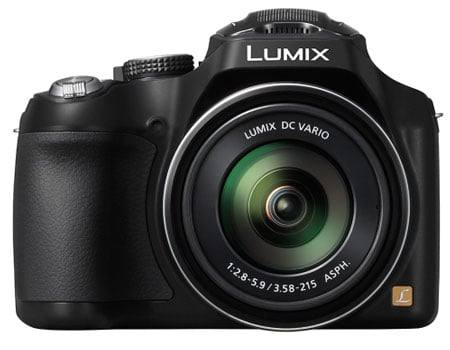
Panasonic Lumix FZ70 / FZ72 design and controls
With a 60x zoom along, the expectation is that the Panasonic Lumix FZ70 / FZ72 is going to be the biggest and heaviest FZ model up to now and while I'd love to able to enunciat that Panasonic has pulled sour a minor miracle and squeezed the massive soar into a more compact frame, that isn't the sheath. Measuring 130 x 97 x 118mm the FZ70 / FZ72 is an on the whole chunkier smattering than the Flagship Lumix FZ200 which measures 125 x 87 x 110mm. Atomic number 3 you tush see from the dimensions, the FZ70 / FZ72 is bigger all round, but information technology's non like you can slip any of these models into your pocket and I doubt that too galore people will live bothered by the additional bulk. There's a similar difference of opinion between the FZ70 / FZ72 and the Powershot SX50 Hs and Nikon P520 with respective dimensions of 123 x 92 x 108mm and 125 x 84 x 102mm. Take a close view those dimensions though and you'll see that another picture emerges. Where the FZ70 / FZ72 is bulky in its course, the Nikon COOLPIX P520 is flyspeck. And then if the FZ70 / FZ72's size is a turn off, the COOLPIX P520 will look like a very attractive option.
The FZ70 / FZ72 weighs 606g with the barrage and an SD card fitted, which compares with 595g for the PowerShot SX50 Atomic number 108 and 550g for the COOLPIX P520. The Lumix FZ200, incidentally, weighs 588g. So spell IT's perceptibly big, it doesn't weigh significantly more than the competition. To assign it in context, the 56g difference between the Lumix FZ70 / FZ72 and Nikon COOLPIX P520 is about the system of weights of a golf game ball.
The design is an evolution of the FZ body title with the same DSLR shape albeit slightly inflated, resultant in a bigger, more comfortable grip with more distance for controls along the top panel. The make love incorporating the built-in flash is bigger than on earlier models and is surmounted by a plastic grille that covers the wind secure stereo mics, all located forward of the calefacient shoe. The only feature happening the upper impanel to the left of the hot shoe is a runty flower-shaped regalia of holes for the mono speaker.
| |
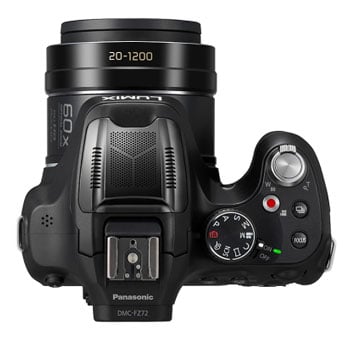
The main controls are totally located on the right side of the crown jury. The mode dial has the familiar range of PASM modes, in addition to a dedicated movie mode position, cardinal custom position, panorama, Scene, Productive and intelligent Auto positions. As on other FZ models the toggle switch is located on a lower floor the mode dial. Though it's moving to buttons on compact super-zoom models like the TZ35 / ZS25, Panasonic is sticking with its lifelong-favoured switch for the FZ70 / FZ72, which means you bottom't turn the camera on to reappraisal photos away pressing and belongings the playback clit unequalled.
At the in advance of the grasp is a fastidious liberal silver shutter release with a zoom shoe collar fence in. This is the entirely means of powering the rapid climb, the FZ70 / FZ72 lacks a secondary button on the lens barrel, as on the Nikon COOLPIX P520, which can follow an advantage when hard to hold the television camera steady at very abundant zoom magnifications. Moving back to the top of the grip, Panasonic has resisted the temptation to fill the unaccustomed area of space with more buttons and in plus to the dedicated movie commemorate button thither's a drive mode and focus push.
On the hindmost panel a mechanical button to the leftfield of the electronic finder pops up the tasteless; this is the only curb connected the camera operated with your socialist hand (divagation from the diopter adjustment for the viewfinder itself), which Panasonic clearly believes has only one Job to do – that of supporting the lens.
Connected the right side of the viewfinder, to the right of a button for toggling the screen and EVF and a programmable AF/AE ignition lock clitoris is the main overlook dial used for exposure control. In the region 'tween the fixed screen and the prolonged thumb inkpad are four buttons and a quaternion-way controller; the uppermost button toggles between AF, Macro instruction AF and Manual focalize modes, below that is the playback button then at the bottom are buttons for toggling the display overlays and the Q (uick) bill of fare button which does dual duty American Samoa a delete clitoris.
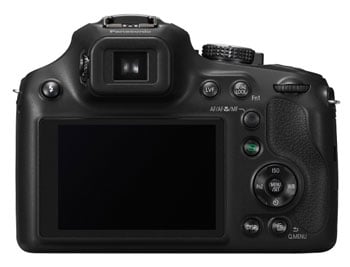 |
The four-way controller functions are ISO, White residuum, and Self-timekeeper with the nine o'clock position allocated to a programmable Fn2 button (Fn1 is the AF/macro/MF button mentioned preceding). While it might seem unconventional, as opposed to having a second Fn2 clit with the focus modes on the four-agency controller, this is the identical setup equally connected the FZ60 / FZ62.
Beneath a flap on the right side of the body you'l find a mini HDMI port for conjunctive to an HDTV and a combined USB / AV port for downloading photos and telecasting and connecting to a standard definition TV via a composite telecasting connector.
The combined assault and battery and card compartment is located in the grip and accessed by a door in the bottom of the photographic camera. It's congenial with SD, SDXC and SDHC cards and the FZ70 / FZ72 besides provides a generous 200MB of inbuilt retention, enough for around 30 optimal quality images or over quintet transactions of VGA video.
The FZ70 / FZ72 takes the same DMW-BMB9E battery as exploited in the FZ60 / FZ62 and the FZ47 / FZ48 before it, so if you're thinking of upgrading to the longer whizz model from one of those you can use any spares you have. The BMB9E, physically quite an life-sized battery, is rated at 895mAh and provides plenty vim to top executive the FZ70 / FZ72 for 400 shots under CIPA conditions. That's very generous and you'll find yourself still shooting long subsequently users of the Canon PowerShot SX500 HS, with a 315 shot limit, have had to replace their battery. With double the capacity of the Nikon COOLPIX P520's 200 shot restrict, the FZ70 / FZ72 looks even more impressive, but to be antimonopoly to the P520 its intrinsic GPS will be partly responsible for its relatively in straitened circumstances battery performance.
Remaining battery life on the FZ70 / FZ72 is indicated past a crude, just telling three-segment graphic in the top right of the sieve Oregon viewfinder which turns red when battery power is running play low.
| |
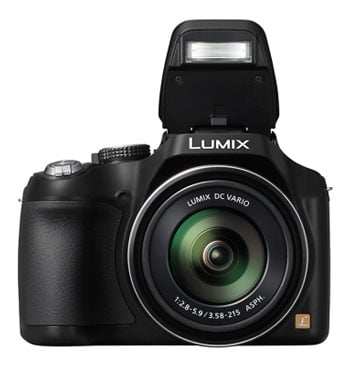
The FZ70 / FZ72 has a collective-in flash which is activated aside pressure a clitoris connected the top right-minded of the rear panel. This operates a natural philosophy gene linkage which pops sprouted the flash head. Physically, the flash assembly is much larger than on either the PowerShot SX50 HS or the COOLPIX P520. It's hinged quite far back on either side of the hot horseshoe and consequently raises well above the lens system, reducing the potential for red-eyeball and shadows along closer subjects.
In the PASM photograph modes the flash lav cost fired mechanically when the conditions require it, or forced on; there are also Auto/Red-center and Slow Sync/Red-eye modes. The red-eye modes attack a pre-flash to pin down the capable's pupils and there's too software correction available from the Rec menu.
The maximum distance quoted for the flash at the wide angle lense mount and with the ISO sensitivity set to Auto is 13.5 metres. That's a pretty impressive performance, generally the built-in flash units on bridge cameras aren't that hefty and are only if well-intentioned for usance with reasonably close subjects or for satisfy-in. The Nikon COOLPIX P520 and Canon PowerShot SX50 HS, with maximum flash distances of 8 metres and 5.5 metres respectively are more typical, but as the figures for these models are also quoted victimisation the Auto ISO sensitivity setting its difficult to make meaningful comparisons. Assuming the figure is given for the maximum default on Auto ISO treasure, which for all three models is 1600 ISO, information technology's fair to assume that the FZ70 / FZ72's flash does in fact deliver around double as much big businessman as the other two models.
If you want a more powerful flash the FZ70 / FZ72 straightaway provides the option to fit an external whole to its tasty shoe. On that point are three Panasonic models available, the FL220, FL360 and FL500 with Guide Numbers game of 22, 36 and 50 (Metres, 100 ISO) respectively. A nice upgrade over the FZ60 / FZ62.
Panasonic Lumix FZ70 / FZ72 screen out and EVF
The Lumix FZ70 / FZ72 is equipped with the same geosynchronous 3 edge in 460k dot TFT LCD test as the FZ60 / FZ62, and that framework's predecessor, the Lumix FZ47 / FZ48. The 3in diagonal and 3:2 expression ratio remains the same as before, so on that point's thin black bars to the sides of 4:3 shaped photos or above and below 16:9 frames. IT's a fine block out and provides a luminous contrasty take i with luminousness control as well as direct contrast/saturation and even colour balance controls available from the Apparatus menu.
The COOLPIX P520's 3.2in 921k dot screen provides a crisper, more highly careful position and Sony's HX300 is as wel endowed with a 921k dot screen, but the PowerShot SX50 Hs gets aside with a 2.8 inch 460k dot screen and even Panasonic’s FZ200 flagship super-rapid growth is transistorised with a 460k dot screen. Patc information technology's nice to take in a slightly more detailed screen, IT's aside no means essential.
The lack of articulation is a different matter though. The PowerShot SX50 Atomic number 108, Nikon COOLPIX P520, Sony Cyber-changeable HX300 and Lumix FZ200 (though not the FZ60 / FZ62) all have something the FZ70 / FZ72 lacks and that's a screen that can be folded out, prepared, down and forrard facing. While many whitethorn non even be aware of the respective resolutions flip-flo-out screens are a feature people tend to feel powerfully about, and most people are in favour of being able to angle the concealment for easier viewing from low and high-altitude positions a well as keeping it out of the sun. Even if you'atomic number 75 not that bothered astir existence able to flip the cover, the side-hinged screens of the PowerShot SX50 Hassium and COOLPIX P520 can make up turned inward for aegis when you're non victimization them.
Of course the LCD screen International Relations and Security Network't the only, operating room possibly even the best way to compile shots on the Lumix FZ70 / FZ72 which inherits the same 0.2 inch 201k pel, 100 percentage catch EVF of the FZ60 / FZ62. That'll come as a little of a disappointment for those who were hoping for the higher resolution 1.3 billion pixel EVF fitted in the FZ200, but that would of course have bumped up the price of the FZ70 / FZ72 as advantageously as bringing it too close for Panasonic's comfort to the corporal specification of its flagship super-zoom, while concurrently out-zooming it with more twice the cooking stove.
In terms of its specification, the FZ70 / FZ72's EVF is in fact rattling similar to both the PowerShot SX50 HS and COOLPIX P520. In practice however, the Lumix FZ70 / FZ72 and PowerShot SX50 HS viewfinders are pretty closely one-to-one in terms of the size of it and brightness of their viewfinders, with the Nikon COOLPIX P520's looking smaller and not quite so bright.
The FZ70 / FZ72's EVF provides a reasonably detailed and unchanging visualise when neither the tv camera nor the subject are moving but, in common with the PowerShot SX50 Atomic number 108 and COOLPIX P520 things get a little jittery when panning or following moving subjects. One solution to this is to switch the Live survey mode from its default 30fps refresh rate to the 60fps alternative. This results in a turn down resolution video display at double the review rate which produces a much Thomas More stable image, peculiarly when either the topic, the camera, or both are moving. Beyond question it will consume more ability, but with a 400 shot CIPA paygrad you plausibly don't need to worry overmuch and the improvement in the showing character (interestingly, the come by resolution is scantily pronounced) is fortunate worth it.
Panasonic Lumix FZ70 / FZ72 lens and stabilisation
The newspaper headline feature of the Lumix FZ70 / FZ72 is of course its extraordinarily farseeing surg lens. With an physics enlargement component of 60x the whizz has a 35mm equivalent range of 20-1200mm. Manifestly a lens of this power is leaving to get you same, very, nestled into eventide quite distant action, but the FZ70 / FZ72 also has an imposingly blanket 20mm equivalent weight extremist-panoramic angle that surpasses anything on tap from the competition.
60x is the biggest range you'll incu on any super-zoom currently available, but the FZ70 / FZ72 isn't the only fantastic-soar up with a 1200mm telephoto, the Canon PowerShot SX50 Hassium can match it, soh if information technology's a time-consuming telephoto you'Ra looking for, the FZ70 / FZ72 International Relations and Security Network't your only option, there's likewise the Sony HX300 and Fujifilm's FinePix SL1000. But what every last these models lack is the Lumix FZ70 / FZ72's 20mm ultra wide-angle; the telephoto range is impressive, but the open fish is just as galvanising and not something you'll find on other models.
Panasonic Lumix FZ70 / FZ72coverage wide | Panasonic Lumix FZ70 / FZ72coverage tele | |
| | | |
| 3.58-215mm at 3.58mm (20mm equiv) | 3.58-215mm at 215mm (1200mm equiv) |
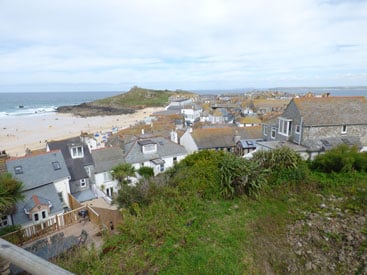
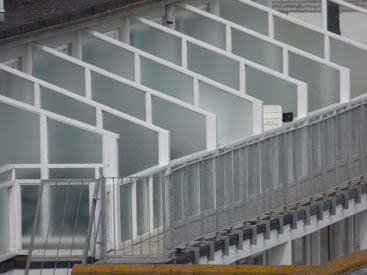
And if a 1200mm telephoto ISN't enough for you,the FZ70 / FZ72 is compatible with Panasonic's 1.7x teleconverter lens accessory originally produced for the FZ100. With the DMW-L55E convertor attached the FZ70 / FZ72's maximum telephoto range is extended to a whopping 2,040mm. And, as with other FZ models there's a range of digital zoom functions including I.zoom, Extended optical zoom and Digital zoom that can digitally run along the zoom. I.Zoom uses interpolation to double the zoom range, providing an effective maximum of 2400mm, at full 16 Megapixel settlement, the other digital zoom options provide reduced resolving results.
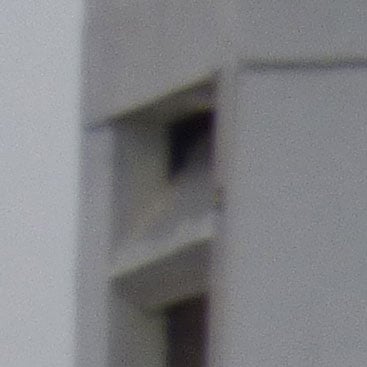
The FZ70 / FZ72 is equipped with Power O.I.S image stabilization which moves the lense elements to compensate for tv camera shake and permit hand-held shots at slower shutter speeds. To test the stabilisation I zoomed the genus Lens to its maximum 1200mm focal length and took a serial of shots in shutter priority way at progressively slower shutter speeds first with the stabilisation overturned forth, then with it turned on. As you can go steady from the crops below, the Lumix FZ70 / FZ72 can shoot at shutter speeds as slow as 1/30 with the stabilization enabled, a little over quint stops slower than pattern suggests is possible without it.
|
Panasonic Lumix FZ70 / FZ72 O.I.S. Slay / On | ||||
| | | |||
| 100% crop, 3.58-215mm at 215mm 100 ISO 1/30 O.I.S Off. | 100% crop, 3.58-215mm at 215mm 100 ISO 1/30 O.I.S on. | |||

Panasonic Lumix FZ70 / FZ72 shooting modes
The FZ70 / FZ72's mode dial bears a close resemblance to the modal value dial on the Panasonic's flagship super-zoom the FZ200 and the cookie-cutter goes for its shooting modes. There are some differences, at that place's only one custom position on the FZ70 / FZ72's fashion dial non two as on the FZ200, and the Panoramic shot modal value introduced connected the FZ200 gets in personal devoted put over on the FZ70 / FZ72's mode dial. On that point are of course the habitual PASM and intelligent Motorcar exposure modes a single Custom position marked C, SCN (with individual scene modes selected on screen), Constructive Control personal effects and Moving picture mode.
Panasonic introduced Creative Operate permeate effects connected the FZ47 / FZ48 and extended the range on the FZ150 with the plus of eight new options. The FZ70 / FZ72 adds a new ane – Of age Days, a variation along Retrospective, inferior strong and with a slight Battle of Magenta cast, making fifteen in whol. The full list is Communicative, Retro, Age-old Years, Alto Key, Low Operative, Sepia, Impulsive Monochrome, Impressive Art, High Mechanics, Cross Process, Toy Effect, Miniature Effect, Soft Focussing, Star Filter, and Unrivaled Point Colour.
| | | | ||
| Expressive | Retro | Old years |
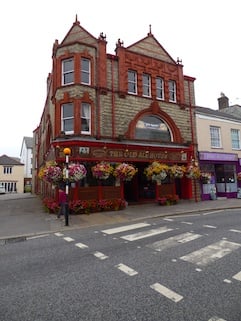
In much cases the titles of these effects are quite synchronic, others not so. Whether Impressive Art is impressive is really a matter of opinion, Dynamic Monochrome isn't an HDR effect, but a unpeasant-smelling contrast monochrome filter. Bilk litigate does look a little like the chemical change from which it takes its name and the star filter adds headliner bursts to specular light sources. High Dynamic claims to 'bring forth the optimum brightness for light and dark parts', only if you're serious about dynamic range the HDR scene musical mode is a much major bet.
Creative Control filters can be applied at the clock time of shooting OR subsequently in the camera from the retouch menu. The last mentioned route at least means you induce the option of also having an original unfiltered image – if you shoot victimisation the effect there's no going back (unless you shoot Unanalyzed+JPEG). Though one advantage of shot with the effect that you Don't get if you apply it post is the option to further refine it aside press the ovolo wheel and adjusting sliders for pic, deepness of field and effect strength.
Most of the effects render a degree of control over vividness settings and focus and, as connected the PowerShot SX50 HS, you dismiss select the size and position of the focus partition in landscape painting and portrait orientations for the Miniature effect. Wardrobe the dedicated immortalize button along the top of the FZ70 / FZ72 and you can start motion-picture photography video with any of the effects applied live. The Toy effect demands a degree of home processing which reduces the recordable shape rate to around 3.5fps, but alternatively of showing jerky motion in sincere-time, these clips are simply played back around eight times faster than normal speed, which further enhances the event.
Apparently this means you'll need to record for around eight times longer than you want the clip to last during playback – so if you wishing a peerless arcminute of accelerated Miniature footage, you'll need to film for about octet minutes. You can see a one minute clip in the examples example of this infra, which took eight minutes to film. But if you're a real rooter of Miniature result movies, the SX50 Hs version is a little more varied, with the choice of three playback speeds
The Lumix FZ70 / FZ72 retains the 3D Photo mode which takes a explode of images while you move the photographic camera more or less 10cm oblique, earlier mechanically selecting two photos from the group and using parallax information to generate a 3D image. It's a similar coming thereto pioneered by Sony. Two files are subsequently recorded past the camera: a conventional ii dimensional JPEG for normal viewing, and an MPO file which contains the depth info and typically measures around 2MB. When related to an 'MPO-compatible' 3DTV complete an HDMI connection, some files are interpreted into a single 3D image; direct, unlike commercially produced 3D content, the images simply contain depth which extends 'tail end' the screen, rather than before of it.
|
Lumix FZ70 / FZ72 Aperture anteriority 200 ISO |
Lumix FZ70 / FZ72 HDR scene mode 200 ISO | |
| | | |
| | | |
| | | |
| 1/30 f5.6 200 ISO | 1/30 f5.6 200 ISO |

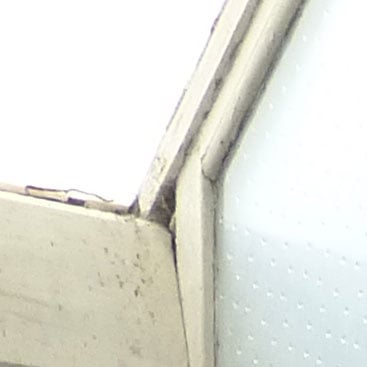
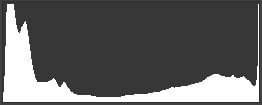
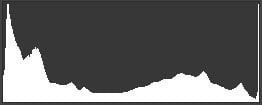
The Lumix FZ70 / FZ72 also includes the FZ200's Handheld Night Shot and HDR modes; both of these stacking modes situated the ISO sensitivity mechanically. I've included an representative of the HDR modal value above. The ISO sensitiveness and opposite exposure settings are automatic and I've compared the HDR mode shot here, which chosen 1/100, f2.8 200 ISO with a dig arrogated in a moment after in Aperture priority mode shot with exactly the homophonic vulnerability.The HDR mode is a king-size improvement on the undivided frame Aperture priority shot with greatly cleared apparition detail as well as improved three-quarter tones and highlights. You can see a 100 percent cut back from Handheld Night Shot mode on my Panasonic FZ70 / FZ72 make noise results page.
| FZ70 / FZ72 Panoramic shooting way |
| |
| 3.58-215mm at 3.58mm Panoramic shooting mode pilot 4928 x 864 pixels |

The FZ70 / FZ72 too includes the Panoramic Shooting mode introduced connected the FZ200 and replacement the earlier Panorama Assist scene mode which provided an overlay to helper you line up overlapping shots for stitching later on a PC. This is quieten the best Canon can do, and the deficiency of a Panorama mode on both the SX50 Element 108 and COOLPIX P520 is a disappointment. In synonymous fashion to Sony's Sweep panorama feature enclosed connected the HX300, the FZ70 / FZ72 takes a sequence of shots American Samoa you circumvolve the camera to bewitch a wide scene and then assembles them in-camera to a single image. You seat hold the camera in portrait or landscape mode, you make to specify which in advance. Finished panoramas are a maximum of 8000 x 1080 pixels if shot in landscape painting orientation and 8000 x 1440 for portrait. Providing you keep on turning and continue the camera passably level the FZ70 / FZ72 will record a stark 360 view. If you're a little wavy-grained, or the subject makes it difficult to put down overlapping images information technology will stop part way through and produce a cyclorama from what it has managed to capture – or you can press the shutter a second prison term to stop at a particular point. Whol in all IT's very simple to use and produces very good results, although as you can see in my example above, there's an steep change of exposure when shot into the Sunlight.
Panasonic Lumix FZ70 / FZ72 movie modes
Acknowledged the similarity between the shooting modes on the FZ70 / FZ72 and the FZ200, you power expect the same goes for video recording modes, only that's perhaps hoping for a shrimpy overly much. As a picture camera, the FZ70 / FZ72 actually has much more in plebeian with the FZ60 / FZ62 shooting HD movies at 1080i settlement at 50 or 60 fps (from 25p operating room 30p sensor output) contingent on region. There's the selection to encode movies as AVCHD files, in which case they're reclaimed in a 'Private' leaflet singly from the tranquillize image files, operating theatre alternatively victimisation the MPEG-4 codec saved as a QuickTime .mov file along with the still images.
The AVCHD mode can record video in either Ample HD 1080i or 720p, some at a rate of 17Mbit/s. The MP4 modality can record picture in Full HD 1080p, 720p or standard definition VGA, at rates of 20, 10 and 4 MBit/s respectively. Every last three modes are encoded using progressive TV at 25p or 30p conditional region, and all match the original sensor output of 25p or 30p respectively.
Using either of the AVCHD modes you're looking at about 120 Mbytes per minute of footage, and as was common, European FZ72 versions are limited to clips no more than 29 minutes and 59 seconds. Having non tested the FZ70 version I commode't state if Panasonic has implemented the same restriction or allowed IT to register until the memory or battery runs out, just I'll report back off when I give birth more information. If you're victimization the MP4 format, the clip length is constricted to 29 minutes and 59 seconds (Beaver State a file size of 4GB) regardless of whether you're using an FZ70 or FZ72. Finally, Panasonic recommends exploitation an SD posting rated at Class 4 or faster for recording movies.
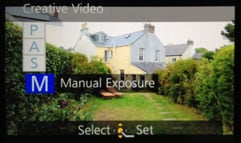
Pressing the devoted movie record button automatically sets the exposure for video, but switch the mode telephone dial to the Creative Video position allows you to record movies in any of the PASM modes. What's more, information technology's achievable to alter the aperture and shutter speed during transcription, levels of hold that are unusual in super-zooms at this Price range. The Canon PowerShot SX50 HS offers only fully automatic exposure see to it or scene modes and the Nikon COOLPIX P520 is too restricted to fully automatic exposure.
IT's a elfin dissatisfactory, though maybe non surprising, that the FZ70 / FZ72 lacks the new Dominating Speed Motion video modes introduced on the FZ200 and this is one area where it lags behind the PowerShot SX50 Element 108 and COOLPIX P520, both of which provide pinched speed, i.e. slow motion video recording.
| |
|---|---|
| Download the original lodge (Registered members of Vimeo exclusively) | |
| Completely of these clips were shot using the Lumix FZ 70 / FZ72's 1080i50 AVCHD mode. The video quality is adept and the stabilisation does a good job during the pan. The AF also copes fortunate, specially during that long journey from the ultra-wide angle destruction of the whizz along range to the 1200mm telephoto. But at the upper limit soar upwards the stabilisation produces a horizontal shimmering effect which is really sore. You hind end reduce it by not moving the television camera, but that sort of defeats the point. A better option mightiness just glucinium to limit your video zooms to shorter focal lengths where there's less of a trouble. | |
| |
|---|---|
| Download the original file (Documented members of Vimeo alone) | |
| Stabilisation was reversed off for this tripod-mounted iridescent. Aside from the grave flare at the source, the Lumix FZ70 / FZ72 copes healthy with the into light section and the photograph on this clip. There's a scarce audible hum from the zoom motor and, once again, the continuous AF does a great chore, especially during the rapid climb. At 1200mm you have to be really thrifty about movement, even with the tv camera on a tripod. The jitter at the end of the zoom in is purely from my finger resting on the soar upwards control, things chill out when I remove it. | |
| |
|---|---|
| Download the original file (Registered members of Vimeo only) | |
| The Lumix FZ70 / FZ72 makes a good job of this interior small-well-lighted panning iridescent with a good timber low-noise result that maintains white exposure and AF controller end-to-end. The colour looks a little desaturated, but the E. B. White balance is good and the stabilization keeps things nice and steady. | |
| |
|---|---|
| Download the original file (Documented members of Vimeo only if) | |
| This coffee berry cup clip tests the Lumix FZ70 / FZ72's consecutive autofocus. With the photographic camera zoomed in a lesser I've started shot the fold of the coffee cup, past panned busy the bar and back over again. To begin with the FZ70 / FZ72 performs well, though it's a little slower with puling the focus back in on the low gear return to the cupful. On the final examination pan back to the cup it fails to re-adjust the focus though. | |
| |
|---|---|
| Download the original file (Recorded members of Vimeo only when) | |
| Finally, here's an example of the Lumix FZ70 / FZ72's Miniature mode in action with a 1 minute clip from 8 minutes worthy of sunset played back at 8x actual upper. | |
Panasonic Lumix FZ70 / FZ72
handling
FZ models are swift starters and the FZ70 / FZ72 is no elision, it's ready to guide a shot in a bitty over a second after sliding the switch to the on position. Although the mode dial lacks the two made-to-order positions of the FZ200 and FZ60 / FZ62, the FZ70 / FZ72 ISN't short on customisation options. The single C position on the mode telephone dial offers the choice of three memorised custom setups via an on screen menu. And then in that respect's solely one fewer than on the FZ200, but you don't have the convenience of beingness able to quickly transposition between two custom settings using the mode dial.
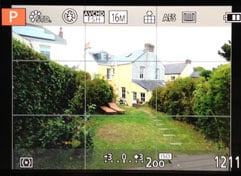
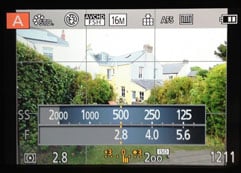
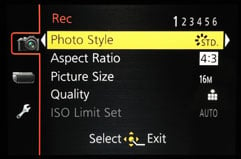
As along the FZ60 / FZ62, there are ii programmable function buttons – the AF/AE lock button and the right button on the quaternion-way controller. With the former organized as Fn1 you have a choice from triad pages of functions you lavatory allot to it including Photo Style, Prime, Metering mode, presentation guides, flash modes and Auto Bracket. The same goes for the Fn2 button. Of course the first of those is only an pick if you don't mind living without an AF/AE lock button.
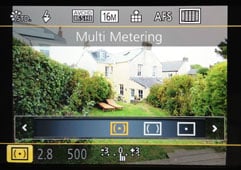
These customisation options reduce the need to access the menu piloting and when you do there's the Q Menu, recently redesigned for the FZ series, which provides direct access to frequently used settings. Apart from looking slicker, with smaller screaky resolution icons, the layout has been revised with options for each menu selection running horizontally rather than vertically. The number of options on the Q Menu runs to unmatchable more can be accommodated on the screen, which means you potty't see the final metering mode option until you curlicue to it and IT has a different layout from all the others. This repugnance ISN't the end of the world simply having to Hunt for things on a quick menu sort of defeats the object and many people volition to sham it's not there and brain for the chief menu.
As I mentioned earlier, the button layout is very similar to the new FZ models, but the bigger size of the FZ70 / FZ72 way thither's more quad between them and that makes information technology easier to find things without having to take your heart from the viewfinder. Public speaking of which the provision of a clitoris to toggle between the screen and EVF makes living a fate easier than happening the PowerShot SX50 HS, where you have to cycle direct the exhibit options, or the Nikon COOLPIX P520 which only activates the EVF when the screen is in the unreceptive position.
The FZ70 / FZ72's 1200mm maximum telephoto provides some challenges for those not utilized to shot with long lenses. Keeping the lens sure at 1200mm is serious, just not impossible sol long as you have the stabilisation enabled.
 |  |  |
 |  |  |
Panasonic Lumix FZ70 / FZ72 pore
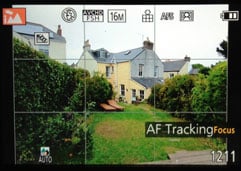
The Lumix FZ70 / FZ72 has four focus modes, 1-Region, 23-Area, AF Trailing and Face Detection. Face detection can detect busy 15 faces and lock chamber centerin on i of them. Multiple AF uses 23 areas to decide the best sharpen and there's a single area AF pick with a resizeable bifocal AF area that can be moved around the screen.
Blue-collar focusing is selected by pressing the AF/AF Macro/MF button on the raise panel and so using the rear dial to adjust the focus referencing a scale connected the screen which magnifies if MF Assist is turned on. One of the problems with this is that the rear dial has three functions and you must first pick out the one you want (in Curriculum mode the choice is program shift, photograph compensation and manual concenter) by pushy it inwards. Kind of than screening the currently selected fashion the screen displays the mode that volition be elite if you push the dial, so (until you get old to IT) you have go a fully Mexican valium retributory to get on your bearings.
I actually recovered manual focussing victimisation the MF assist magnified screen and distance scale readout quite tricky. If your theme is unmoving and well lit and the tv camera is mounted on a tripod it can work, but don't expect to be able to utilize manual center as a substitute for AF mitt-held in poor light. In AF tracking manner pressing the AF/AE lock happening the keister panel locks and tracks the object inside the central direct area. Care Face off detection, AF tracking holds onto subjects well in good light, but in poor lighting conditions and when subjects move quickly, it crapper slip off the target.
Equal the FZ60 / FZ62 and FZ200, the Lumix FZ70 / FZ72 supports face recognition. Up to six faces can be stored along with name, D.O.B. and a custom AF picture. Focus and exposure are prioritised on recognised faces which can be registered manually, operating room you can set things heavenward so that the tv camera automatically registers frequently shot faces. It's a lineament that's popular on Panasonic's compact range and undeniably great fun to date the names of masses appear below their faces when they're recognised.
Panasonic Lumix FZ70 / FZ72 Continuous shot
The Lumix FZ70 / FZ72 's unbroken shot features are accessed by pressing the Burst mode button just behind the shutter release. There are three ladened resolution burst speeds procurable – 2fps, 5 fps and 9fps – entirely use the mechanistic shutter and all only the fastest offer a dogging AF option. On that point's also a 10fps choice at reduced 3 Megapixel resolution. Wherefore would you earnings the price of drastically diminished resolution to gain simply a one-on-one unnecessary frame per second? Well, because the burst confine for the full resolution 9fps mode is a mere three frames, which very only clean qualifies information technology Eastern Samoa a damaged when you flirt with it.
Below I've included an instance of the FZ70 / FZ72 operating at the best afloat closure 9fps burst manner, as you can date, while the action is captured at a fast rate, the three-frame burst is so little as to Be hardly magna cum laude of the title 'sequence'.
To test the Lumix FZ70 / FZ72's incessant shooting I fitted it with a freshly formatted 8G Sandisk Extreme UHS-1 card and set it to the first quality 16 Megapixel resolution and the fastest 9fps burst. The FZ70 / FZ72 fired off a burst of three frames at exactly 10fps. Patc No ace would argue that 10fps is a very respectable continuous shooting speed to give birth at your disposal, the briefness of the burst severely limits its usefulness, allowing you to capture an natural action chronological succession lasting around a fifth of a second.
And if you're hoping for better performance at the slower continuous shootings speeds you'll be disappointed. With the 5fps single AF mode chosen the performance was similar – a trinity-physique salvo in half a second, this time followed by a short hesitate and more frames at a significantly reduced rate of around 1fps.
This performance is or s in argumentation with the FZ60 / FZ62 (though the fastest full resolution f number is quoted at 10fps, not 9fps) and even as disappointing. The one consolation is that the 3 Megapixel reduced resolution Hi-race burst mode delivers the promised 10fps for a 100-frame outburst.
The PowerShot SX50 Hassium lav fire a burst of 10 frames at a quoted rate of 10fps, but was closer to 14fps in my tests. That's seven frames more than you'll puzzle out from the FZ70 / FZ72, it's still less than a full second of action, simply a least you dumbfound a sequence worthy of the name.
The Nikon COOLPIX P520's Unceasing H mode shoots a burst of 7 frames at 7fps, providing a sequence covering a second's valuable of action. Information technology has some different innovative and various options though, including a rock-bottom resolution 3 Megapixel pre-shooting cache that starts recording at 15fps when you fractional-press the shutter. There are also reduced resolution 60 and 120fps options. The truth is, that patc none of these models offer the kindhearted of ceaseless shooting functioning that you'd get with a middle-graze DSLR, the Lumix FZ70 / FZ72's is the least impressive of the three.
Panasonic Lumix FZ70 / FZ72
Sensor
The Lumix FZ70 / FZ72 has a newly designed 16.1 Megapixel MOS sensor that produces images with a maximum sized of 4608 x 3456 pixels. Images can be blessed as JPEG files at one of two quality/compression ratios; the best superior Fine setting produces images with a file size of approximately 5.5 to 7.5MB. Alternatively in a welcome upgrade over the FZ60 / FZ62 you can now disk In the buff files with or without a JPEG. The ISO range is 100-3200 with a High Sens scene mode that operates between 1600-6400 ISO and the shutter speed range is 4 – 1/2000.
To see how the quality of the Lumix FZ70 / FZ72 measures-up in practice, take a face at my Lumix FZ70 / FZ72 quality and Lumix FZ70 / FZ72 randomness results pages, browse my Lumix FZ70 / FZ72 images, Oregon bound off to the furrow and head straightarrow for my finding of fact.
Pages: 1 2 3 4
Panasonic Lumix FZ70 / FZ72 review
Source: https://www.cameralabs.com/panasonic_lumix_dmc_fz70_fz72/

Posting Komentar untuk "Panasonic Lumix FZ70 / FZ72 review"